One click to all services

https://uslugi.gov.mk/

Waste

Global environmental problems we face today are largely the result of excessive human exploitation of natural resources, including (fossil) fuels, minerals, water, land, and biodiversity.

It is becoming increasingly clear that the prevailing European model of economic development — based on high resource use, waste generation, and pollution — cannot be sustained in the long term. Many resources are used only for a short period, or they are lost to the economy through disposal or quality degradation during recovery operations.

In recent years, the introduced concept of the circular economy and related policies aim to address resource use, production, consumption, and waste at a higher level. This concept seeks to close material loops by maintaining the value of products, materials, and resources in the economy for as long as possible. This effectively reduces waste generation and the use of virgin material.

Resource use, as well as waste generation and treatment, result in significant environmental pressures during extraction, production, use, and product end-of-life stages. Environmental policy goals include reducing the amount of materials used in the economy, improving resource efficiency, reducing waste generation, and turning waste into a resource. Waste prevention and management are key aspects of the circular economy. Resource efficiency is essential if we want to decouple economic development from environmental degradation. Earth’s resources are limited, and their extraction generates environmental and climate impacts. Their more efficient use helps minimize these impacts. Thus, resource efficiency is one of the fundamental elements needed to create a circular, greener economy in Europe, as well as more sustainable production and consumption models.

Waste management legislation in our country is aimed at promoting the circular economy through extraction of quality resources from waste as much as possible. Furthermore, the Green Agenda for the Western Balkans policy relies on several pillars focused mainly on reforms in the region to align with the ambitions of the European Green Deal through the European Union’s economic and investment plan. The European Green Deal aims to promote growth through transition to a modern, resource-efficient, and competitive economy.

The Waste Management Law provides a legitimate framework for waste treatment and management. It introduces the concept of hierarchy in waste management. The hierarchy usually adopted is minimizing/reducing waste at the source, recycling, waste recovery (restoring resources, i.e., materials/products and energy), waste transformation (without resource recovery), and landfill disposal. For certain categories of waste, specific approaches are necessary. Therefore, besides the comprehensive Waste Management Law, the Republic of North Macedonia has many other laws dealing with different types of waste. The Green Agenda commits the Western Balkans to move towards a circular economy by improving waste management; increasing resource productivity; establishing innovative and more efficient production and consumption methods; and introducing circularity into business models.

Waste legislation aims to protect the environment and human health and assist the country’s transition to a circular economy. It sets goals and strives to:

  • improve waste management,

  • stimulate recycling innovations,

  • limit landfilling.


In the Republic of Macedonia, there are several laws that cover and address specific issues and matters related to waste. Some of these laws fall under the jurisdiction of the Ministry of Environment and Spatial Planning


Documents that explain the standards, procedures, and measures for waste management, including information on treatment, sorting, and maintaining responsibility, in order to ensure effective and sustainable waste management

Guidelines for the procedures of municipalities, municipalities in the City of Skopje, and the City of Skopje regarding abandoned or waste vehicles, in steps

INSTRUCTION for conducting the procedure for issuing a permit for a collective operator and for conducting the procedure for approving or rejecting the annual report in accordance with the Law on Packaging and Packaging Waste Management

Approvals or licenses issued by competent authorities that regulate activities related to the treatment, storage, and responsibility management of waste, in accordance with legal standards and regulations

In the context of the circular economy, waste management focuses on preserving the value and properties of waste materials by supplying high-quality secondary raw materials to the economy.

Waste is generated through human activities and is seen as an inevitable by-product of economic activities (waste created from inefficient production processes, the short lifespan of goods, and unsustainable consumption). The generation of waste indicates a loss of material and energy and imposes costs on society and the state for collection, treatment, and disposal of waste when viewed outside the concept of a circular economy.

Waste is one of the main environmental problems in many European countries, including the Republic of North Macedonia, considering the fact that the quantities of waste are constantly increasing.

The majority of waste in the Republic of North Macedonia is deposited in legal and illegal, so-called wild landfills. Recycling of waste in the Republic of Macedonia is limited. The impact of landfills on the environment, and consequently on human health, is significant due to the emission of greenhouse gases (methane), organic micropollutants (dioxins and furans), volatile heavy metals into the air, and leachate from the landfills which contaminates the soil and groundwater and may contain toxic substances.

Initiatives promoting processes for reducing waste quantities, recycling, and implementing safe standards for waste disposal are important.

A primary goal in EU countries as well as in the Republic of North Macedonia is to establish a strong link between economic growth, the use of natural resources, and waste production, with the aim of reducing the burden on the environment.

The Second Environmental Action Plan of the Republic of Macedonia outlines certain goals related to waste, including integrated waste management, effective institutional and organizational setup, and improved infrastructure for waste management.

According to the waste legislation in the Republic of North Macedonia, the priorities in waste management are:

  • Avoidance of waste generation and reduction of harmful impacts of waste on the environment, life, and human health;

  • Improvement of production technologies to reduce waste generation and use of ecological products and less packaging;

  • Recycling and reuse of waste or its use in other processes for extraction of secondary raw materials, or as a source of energy.

Most waste generation comes from production activities, quarries and mines, construction, agricultural and forestry waste, municipal waste, etc.

Waste from production activities mainly consists of food, wood, paper, chemicals, non-metallic minerals, base metals, and others. Production activities can play a central role in reducing the amount of generated waste by:

  • Incorporating life cycle analyses in the design and production of goods and services;

  • Promoting sustainable use of materials and energy;

  • Eliminating or reducing the use of substances and materials hazardous to human health and the environment.

A List of Waste Types has been adopted, including:

  • Municipal waste

  • Waste from mines and quarries

  • Waste from electricity production

  • ...

Municipal waste is one of the main waste streams generated. Municipal waste includes waste from households, as well as other waste generated in the commercial and industrial sectors which, due to its characteristics, composition, and quantity, is similar to household waste. Household waste is waste that is regularly collected from households, including waste left at collection points and centers, separately collected hazardous household waste, bulky waste, garden waste, and so on. About 78% of the population is included in the public municipal waste collection system, which is carried out by public enterprises. The remaining population (22%) that does not use municipal services is mostly concentrated in rural areas. It is common practice to collect unseparated municipal and non-hazardous industrial waste, as well as unseparated hazardous and non-hazardous waste fractions.

A Rulebook on general rules for handling municipal and other types of non-hazardous waste has also been adopted.

 Rulebook on General Rules for Handling Municipal and Other Types of Non-Hazardous Waste

Activities related to the processing and recycling of municipal waste are very limited. Regarding recycling, municipalities in North Macedonia do not organize separate collection of biowaste or dry recyclable materials. There are some marginal recycling activities carried out by informal waste collectors who collect waste from landfills and bins. Established systems for packaging waste, batteries and accumulators, electrical and electronic equipment have been set up by Producer Extended Responsibility organizations, in agreement with municipalities and other entities involved in the producer extended responsibility scheme.

The rulebook on the amount of biodegradable components in waste that can be landfilled aims to reduce the quantity of biodegradable waste deposited through prevention, recycling, composting, biogas production, or other methods of utilizing the material and energy of biodegradable waste. A large portion of the plant tissue produced in agriculture is reused in an environmentally favorable manner. Fertilizer obtained from large and small livestock is fully used for soil fertilization.

 Rulebook on the Quantity of Biodegradable Components in Waste Allowed for Landfilling

Regarding packaging waste, a formal system for its collection and recycling is organized and outlined in the relevant law.

There is legal regulation for the treatment of waste tires, which states that in the processing of waste tires, recycling takes precedence over their use for energy purposes. The processing should cover at least 70% of the quantities of new tires imported in the previous year into the Republic of Macedonia.

 Rulebook on the Procedure for Handling Waste Tires

 The legal regulation for waste from end-of-life vehicles is aimed at preventing the generation of waste from used vehicles by promoting the possibility of organized collection and handling of used vehicles, with the option for the reuse of certain structural components and materials, followed by their recycling and proper disposal of waste. This includes monitoring all imported vehicles, all used vehicles taken over by collection points, as well as the quantities of components and materials for further processing, recycling, and disposal, including hazardous components from dismantled used vehicles.

Rulebook on Environmental Protection Measures for Handling End-of-Life Vehicles

 It represents the system of facilities and installations for waste management that are interconnected (primary waste collection system, transfer stations, secondary transport systems, landfills). A rulebook has been adopted for the minimum technical requirements regarding environmental protection that transfer stations must meet, the conditions that locations where transfer stations are built or installed must fulfill, as well as the deadlines for waste storage at transfer stations according to the types of waste.

 Rulebook on the manner and conditions for the functioning of the integrated waste disposal network

 Rulebook on the minimum technical requirements

 The Rulebook on the manner and conditions for waste storage, as well as the conditions that storage locations must meet, prescribes the types and methods of storage, the determination of the waste characteristics immediately before storage, as well as the general conditions of the system for protection, control, and maintenance of the waste storage locations. The rulebook also provides an indicative list of incompatible wastes and materials.

 Rulebook on the manner and conditions for waste storage, and the conditions that the storage locations must meet.

The solid waste generated in the Republic of Macedonia is mostly disposed of in landfills. Illegal landfills for municipal waste are quite prevalent, especially in rural areas. Landfills pose a risk in terms of pollution of air, soil, surface water, and groundwater. They also present potential risks to biodiversity, agricultural land, and human health due to the disposal of mixed hazardous and non-hazardous waste.

To regulate landfill operations, several by-laws exist, such as the Rulebook on the conditions that landfills must meet, which prescribes conditions for preventing and reducing harmful impacts of waste on the environment, life, and human health.

The conditions for accepting waste in a particular landfill, based on the type and composition of the waste, leachate formation potential, long-term behavior of the waste, and detailed data on its general properties, are outlined in the:

When defining the acceptance criteria, environmental and human health protection must be considered. The general properties of the waste include the amount of organic matter, its biodegradability, ecotoxicological characteristics, etc., determined through analysis of parameters such as dissolved organic carbon, total organic carbon, total dissolved solids, heavy metals, sulfides, chlorides, phenols, and others.

The objectives are to prevent and reduce the negative effects of landfills on the environment—surface and groundwater, soil, air—and on human health. The rulebook provides for monitoring the state of the landfill body, nearby waters, gas emissions, air emissions from the landfill and incineration plants, etc.

Waste incineration is performed in specially constructed facilities, depending on the type of waste. These incineration or combustion plants and all related structures, devices, and equipment must be designed and operated in a way that prevents exceeding emission limit values into the air, soil, and water, avoids odors and noise, and ensures the protection of life and human health.

Waste from mines and quarries can cover large areas of land and have harmful effects on the air, water, and soil unless properly managed. Various activities in mining and quarrying result in significant amounts of unused materials, differing in nature and potential hazard.

The amount of waste from energy transformation depends on the type of fuel used, but some data on waste quantity can be derived from the amount of electricity produced. Hydropower plants and gas-fired power plants do not generate solid waste. In contrast, thermal power plants that use coal and other fossil fuels produce large amounts of waste, such as ash and others. This means that shifting electricity production toward cleaner and renewable energy sources will result in a reduction in the amount of waste generated.

Waste generated from construction and demolition activities can contain hazardous substances such as asbestos, which may be present in large quantities when old buildings are demolished or renovated. A large number of components in construction waste can be recycled and replace up to 10% of primary raw materials.

Rulebook on the method of handling asbestos waste and products containing asbestos

Hazardous waste is waste that contains substances possessing one or more properties such as explosiveness, reactivity, flammability, irritability, toxicity, infectivity, carcinogenicity, etc. Due to the hazardous substances it contains, hazardous waste poses a serious risk to the environment and human health if not managed properly and safely. Certain sectors of the economy produce hazardous waste, with the manufacturing industry being the largest among them. As is the case with other types of waste, the establishment of legal regulations, appropriate training of personnel for managing hazardous waste, and increasing public awareness are the main elements for its safe management.

Hazardous waste poses a greater risk to the environment and human health than non-hazardous waste, and therefore requires a strictly controlled management regime regulated by the

The main principles on which hazardous waste management is based are: reduction of hazardous waste and safe transportation thereof, reduction of its hazard level, and appropriate treatment. This rulebook prescribes certain safety measures regarding the collection, handling, and monitoring of hazardous waste, as well as additional measures related to labeling, packaging, and marking hazardous waste from the producer to final disposal or recycling. Methods for processing hazardous waste, including reuse, recycling, and use of waste as an energy source, should correspond to the types and quantities of hazardous waste processed. Permits issued to facilities handling hazardous waste must meet stricter criteria than those for facilities handling non-hazardous waste.

Polychlorinated biphenyls (PCBs) belong to a group of synthetic chemicals known as Persistent Organic Pollutants (POPs). PCBs were mass-produced from the 1930s to the 1980s. They have high chemical stability and heat resistance and have been widely used as components in electrical and hydraulic equipment, as well as lubricants. They are used in enclosed apparatuses as dielectric fluids in electrical equipment such as transformers, capacitors, and hydraulic systems. PCBs are found in industrial oils, paints, adhesives, plastics, etc. PCBs are classified as possible human carcinogens and producers of various adverse effects in humans and animals, including reproductive toxicity, immunotoxicity, and teratogenicity. In certain environmental media such as groundwater, surface water, soil, and food, PCBs can be transported over long distances and detected far from their production or use sites. Identification of locations with transformers containing PCBs is ongoing, and removal (incineration abroad) is already being carried out.

Lubricating oils are commonly used products in everyday life that enable engines and machines to function. During use, oils lose their properties and become contaminated. Used oils are replaced with new lubricating oils after some time.

Waste oils fall into the category of hazardous waste due to their hazardous characteristics. Waste oils found in rivers and lakes threaten aquatic life. Just one liter of waste oil can contaminate millions of liters of water. Soil contamination occurs as a result of spilled waste oils on land surfaces. A system for collection, storage, regeneration, and disposal of waste oils is created to prevent negative environmental impacts and to derive economic benefit through waste oil regeneration.

Procedures and labeling methods for medical waste are prescribed to reduce the negative and harmful effects on the environment and human health. Separate collection of medical waste in hospitals and other healthcare institutions is slowly developing.

Legal and natural persons who produce, possess, or process titanium dioxide are required to submit data on titanium dioxide waste intended for disposal to the competent environmental authority – the Environmental Administration – and to perform monitoring of soil, water, and air at sites where titanium dioxide waste is processed, stored, and disposed of, as well as in surrounding areas considered uncontaminated.

The current legal framework regarding waste is based on the concept of a hierarchy in waste management. This means that ideally waste should be prevented, and what cannot be prevented should be reused, recovered, or recycled as much as possible. Meanwhile, landfill disposal should be used as little as possible, since it is the worst option for the environment and indicates a loss of resources. The waste management hierarchy should not be seen as a difficult or quickly achievable goal, especially considering that there are different waste treatment methods with varying environmental impacts. The aim of moving towards recycling and recovery represents progress within the waste management hierarchy and a reduction in landfill use.

Waste generation prevention should take a primary place since reducing waste also means reducing the need for collection and treatment, which correlates with costs and environmental impact. Prevention of waste creation involves the use of materials, goods, and services in a way that their production, use, reuse, and recycling will result in the smallest possible waste generation. Prevention is only one part of the cleaner production concept.

Perhaps the greatest challenge is establishing an appropriate recycling cycle for waste.

Incineration or waste combustion with energy recovery is another option to avoid landfills.

Landfilling is the lowest possible option in the waste management hierarchy but remains the dominant method used in our country. Landfills in our country are often improperly managed and do not meet minimum environmental and human health standards. A major challenge is to meet certain standards when constructing landfills and to close improperly managed and maintained sites.

Accurate and timely data on waste is one of the key elements for long-term prevention of illegal dumping sites. Inadequate data can lead to inappropriate decisions regarding waste legislation and the establishment of inadequate waste management infrastructure.

Waste management in our country remains a problem because the amount of waste is continuously increasing, and the legal framework is sometimes poorly implemented.

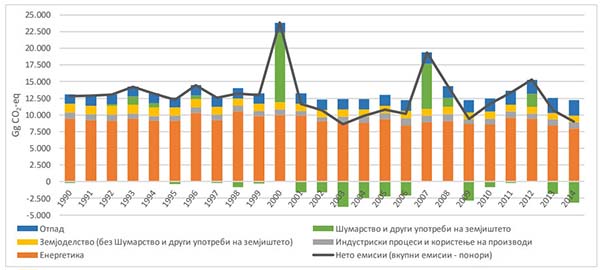
Greenhouse gas emissions from the waste sector include the following categories: solid waste landfills, biological treatment of solid waste, waste incineration and open burning, and wastewater treatment and discharge. Total emissions from this sector were estimated at 2,226.1 Gg CO2-eq in 2013 and 2,323.5 Gg CO2-eq in 2014. The most significant emissions come from solid waste landfills, which accounted for 94.4% of the total emissions from this sector in 2014. Emissions from waste incineration and open burning represent 1.4% of the total waste sector emissions. The remaining 4.2% of greenhouse gas emissions from this sector originate from the treatment and discharge of wastewater (from households and industry). Methane (CH4) emissions constitute 97.6% of the total emissions (expressed in CO2-eq) from the waste sector in 2014. CO2 emissions from this sector in North Macedonia occur only as a result of open burning of waste and account for 0.4% of the total sector emissions, while N2O emissions represent 2% of the total sector emissions. The largest share of emissions comes from the energy sector, with 65.2% in 2014, followed by the waste sector with 19%.

Greenhouse Gas Emissions and Removals by Sector (in Gg CO2-eq)

Import, export, and transit of waste in the Republic of North Macedonia are carried out in accordance with Articles 92, 93, 94, 95, 96, and 97 of the Law on Waste Management. Import, export, and transit of waste in the Republic of North Macedonia are conducted according to the Basel Convention on the Control of Transboundary Movements of Hazardous Wastes and Their Disposal.

Rulebook on the form and content of the documents for transboundary movement of waste

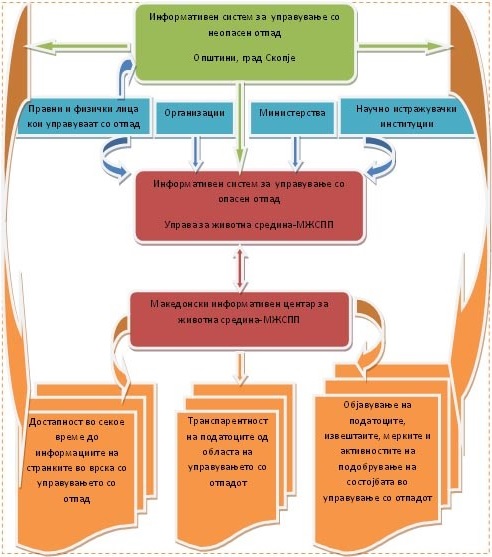
The Ministry of Environment and Spatial Planning organizes an informative system for waste management as part of the overall Macedonian Environmental Information System. The organizational units for regional waste management organize the informative system at the local level, which ensures the collection and presentation of data regarding the status of non-hazardous waste management. The organizational units for regional waste management are obliged to submit the obtained data on the status of non-hazardous waste management to the competent authority for environmental expertise—the Environmental Administration.

 Waste Management Information System


Accessibility Menu